
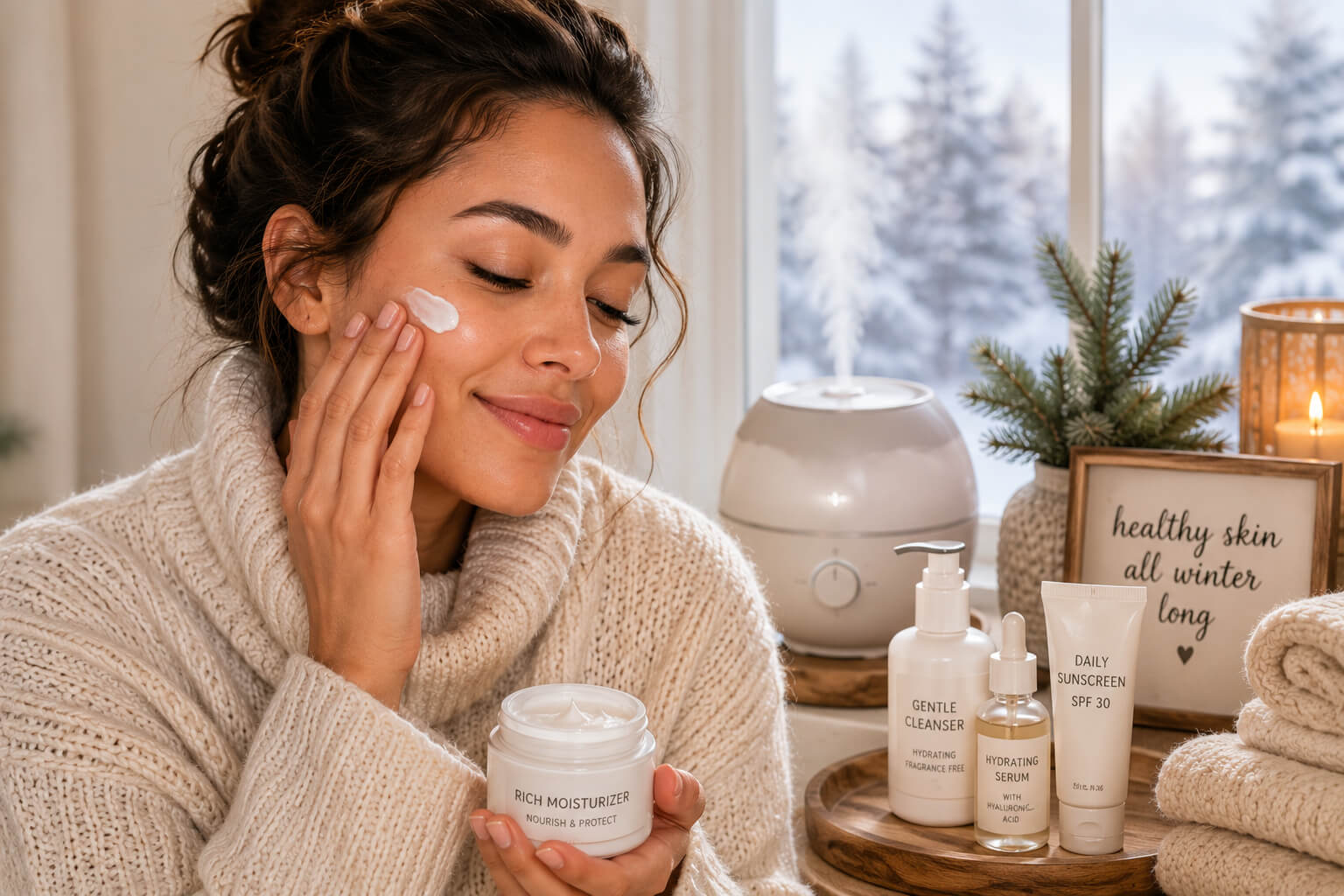
17 Cold Weather Skincare Tips for Dry-Looking Skin
Cold weather can be beautiful, but your skin may not be a fan. Chilly outdoor air, low humidity, indoor heating, hot showers, and frequent washing can all leave your complexion looking dull, flaky, tight, or rough. The good news? You don’t need a complicated 12-step routine to help your skin look healthier during the colder months.
These cold weather skincare tips focus on simple changes that protect your skin barrier, reduce moisture loss, and make your routine feel more comfortable. From choosing a richer moisturizer to rethinking your shower temperature, small adjustments can make a noticeable difference. Here are 17 practical ideas to help your skin look soft, smooth, fresh, and well cared for when temperatures drop.
Why Does Cold Weather Make Skin Look So Dry?
Cold, dry air can make it harder for skin to retain moisture. Indoor heating can contribute to the problem by reducing humidity inside your home, while hot showers and harsh cleansers may strip away some of the skin’s natural oils. The result can be tightness, flaking, rough texture, irritation, and a complexion that makes fine lines appear more noticeable.
The goal isn’t to overwhelm your skin with more products. Instead, focus on supporting your skin barrier and reducing unnecessary moisture loss.
1. Switch to a Richer Moisturizer
One of the easiest cold weather skincare tips is to reconsider the texture of your moisturizer.
A lightweight gel may feel perfect during hot weather, but colder conditions can call for a creamier formula. Creams generally contain more oil than lotions and can help preserve moisture more effectively, while ointments are even more occlusive.
Look for nourishing ingredients such as:
- Ceramides
- Glycerin
- Shea butter
- Fatty acids
- Petrolatum
- Cocoa butter
You don’t necessarily need a completely new routine. Sometimes simply moving from a lightweight lotion to a cream is enough to make your skin feel considerably more comfortable.
2. Moisturize While Your Skin Is Still Damp
Timing matters almost as much as the moisturizer itself.
After cleansing or showering, gently pat your skin dry but leave it slightly damp. Then apply your moisturizer. This helps trap some of the water on your skin’s surface rather than allowing it to evaporate immediately. Dermatologists commonly recommend moisturizing shortly after washing for this reason.
Try making this a habit:
Cleanse → gently pat dry → moisturize immediately.
It’s a tiny change that can make your winter routine much more effective.
3. Turn Down the Shower Temperature
A steaming shower can feel incredible after spending time in cold weather, but very hot water isn’t your skin’s best friend.
Hot water can remove natural oils and worsen dryness. Instead, choose comfortably warm or lukewarm water and keep your shower reasonably short. Mayo Clinic recommends limiting bathing or showering to around 5–10 minutes when dealing with dry skin.
Your skin doesn’t need to feel squeaky clean afterward. In fact, that tight feeling can be a sign that you’ve cleansed too aggressively.
4. Choose a Gentle, Fragrance-Free Cleanser
Winter isn’t the ideal time to experiment with harsh cleansers that leave your face feeling stripped.
Choose a gentle cleanser designed for dry or sensitive skin. Look for fragrance-free formulas and avoid products that leave your skin feeling tight immediately after rinsing.
And here’s an important distinction: fragrance-free isn’t necessarily the same as unscented. Unscented products can still contain fragrance ingredients used to mask odors, whereas fragrance-free products are formulated without added fragrance.
If your skin is especially dry, consider using a gentler cleansing routine in the morning and saving your more thorough cleanse for the evening.
5. Don’t Over-Exfoliate Flaky Skin
Seeing flakes can make you want to reach for a scrub—but scrubbing isn’t always the answer.
When dry-looking skin appears rough or flaky, aggressive exfoliation can make the problem worse by further irritating the skin barrier. The American Academy of Dermatology specifically warns against over-exfoliating dry winter skin.
Instead of trying to physically remove every flake, focus first on hydration.
If you already use exfoliating acids, consider reducing their frequency when your skin becomes unusually dry, tight, or irritated.
6. Keep a Humidifier in Your Bedroom
Your skincare routine isn’t the only thing that matters. Your environment matters too.
Indoor heating can make the air noticeably dry, which may contribute to moisture loss from your skin. A cool-mist humidifier can add moisture to indoor air and may help when your bedroom feels particularly dry.
Place the humidifier somewhere appropriate in the room and, importantly, keep it clean according to the manufacturer’s instructions.
Think of it as environmental skincare: you’re not putting another product on your face; you’re changing the conditions surrounding your skin.
7. Apply Lip Balm Before Your Lips Start Cracking
Don’t wait until your lips are painfully dry before reaching for lip balm.
Lips are particularly vulnerable to cold, dry weather because they don’t have the same protective oil-producing structures as much of the rest of the skin.
Keep a nourishing lip balm nearby and apply it throughout the day. Before heading outdoors, protect your lips from wind and cold by covering them when practical and using a moisturizing lip product.
If a product repeatedly stings or irritates your lips, stop using it and try a simpler formula.
8. Give Your Hands Extra Moisture
Frequent handwashing combined with cold, dry air can leave hands feeling rough and uncomfortable.
Keep a hand cream near your sink, desk, bedside table, or wherever you wash your hands most frequently. Apply it after washing while your hands are still slightly damp. Dermatologists recommend moisturizing hands regularly, particularly after wetting them.
For particularly dry hands, a thicker cream or ointment may be more useful than a thin lotion.
At night, apply a generous layer before bed so your hands have several uninterrupted hours to recover.
9. Protect Your Skin From Wind and Cold
Skincare isn’t only about what you apply—it is also about what you protect.
When you’re outside in cold or windy conditions, cover as much exposed skin as reasonably possible. A scarf, hat, gloves, and weather-appropriate clothing can help reduce direct exposure to harsh conditions.
If your cheeks or lips tend to become particularly dry, pay special attention to those areas.
Think of your winter accessories as part of your skincare routine.
10. Don’t Skip Sunscreen in Cold Weather
Cloudy skies and cold temperatures don’t mean UV radiation disappears.
Exposed skin can still receive ultraviolet radiation during colder months, and UV exposure can contribute to premature skin aging and other forms of skin damage. Snow can also reflect UV radiation, increasing exposure during winter activities.
Use a broad-spectrum sunscreen on exposed areas during the day, including your face, neck, ears, and hands.
This is one of those cold weather skincare tips worth keeping year-round rather than treating as a seasonal extra.
11. Simplify Your Routine When Your Skin Feels Irritated
More products don’t automatically mean better skin.
If your complexion suddenly feels tight, stings when you apply products, or becomes unusually flaky, consider simplifying your routine temporarily.
A basic routine can look like:
Morning:
Gentle cleanse or rinse → moisturizer → sunscreen
Evening:
Gentle cleanser → moisturizer
Once your skin feels comfortable again, you can gradually reintroduce additional products.
A simpler routine also makes it easier to identify which product may be irritating you.
12. Pay Attention to Your Moisturizer’s Ingredients
Instead of choosing a moisturizer based only on packaging or trendy claims, look at the ingredient list.
For dry-looking skin, ingredients such as ceramides, glycerin, fatty acids, shea butter, cocoa butter, and urea may be useful components of a moisturizing routine.
Different ingredients serve different roles. Some help attract water, while others help soften the skin or reduce moisture loss.
If you have oily or acne-prone skin, you may prefer a lighter, non-comedogenic formula rather than automatically choosing the thickest cream available.
13. Moisturize Your Body, Not Just Your Face
It’s easy to give your face all the attention while ignoring the rest of your skin.
Cold weather can leave your arms, legs, elbows, knees, and feet feeling dry too. Apply a body cream after bathing, concentrating on areas that become roughest.
For extremely dry patches, a thicker cream or ointment can provide more lasting moisture than a lightweight body lotion.
A simple trick: keep your body moisturizer where you can see it. If it’s hidden in a cabinet, you’re much more likely to forget it.
14. Choose Soft Fabrics Against Your Skin
Your clothes can affect how comfortable dry or irritated skin feels.
Rough fabrics can create friction, particularly when your skin is already dry. If your skin is sensitive, consider wearing soft, breathable layers close to your body. Cotton and silk are among the fabrics recommended for irritated dry skin.
You can also choose laundry detergents labeled fragrance-free if scented products seem to irritate your skin.
And don’t assume that because a fabric feels warm, it’s automatically skin-friendly. Warmth and softness are two different things.
15. Be Gentle With Your Skin After Washing
How you dry your skin matters.
Instead of vigorously rubbing your face or body with a towel, gently pat the skin dry. Rubbing can create unnecessary friction, especially when the skin is already irritated.
Then apply moisturizer while your skin still has a little moisture left on it.
This simple cold weather skincare tip takes only a few seconds but can make your routine gentler from start to finish.
16. Don’t Forget Your Neck and Hands
Your skincare routine shouldn’t stop at your jawline.
Your neck, ears, and hands can also be exposed to cold air and UV radiation. Apply moisturizer to these areas and remember sunscreen on exposed skin during the daytime. Dermatologists recommend year-round sun protection for exposed areas, including the hands.
If your hands are especially dry, reapply hand cream after washing rather than relying on one application in the morning.
These small areas are easy to overlook but can become some of the first places to show dryness.
17. Know When Your Skin Needs Professional Help
Sometimes dry-looking skin is more than a seasonal skincare issue.
If your skin becomes persistently red, cracked, painful, bleeding, severely itchy, or unusually irritated—or if simple changes aren’t helping—consider speaking with a dermatologist. Excessive dryness can sometimes be associated with an underlying skin condition that needs specific treatment.
Don’t feel like you have to tolerate painful skin simply because it’s cold outside.
A dermatologist can help determine whether you’re dealing with ordinary seasonal dryness or something that requires a different approach.
A Simple Cold Weather Skincare Routine
You don’t need dozens of products to build a winter-friendly routine. Start with the basics and adjust based on how your skin behaves.
Morning
- Use a gentle cleanser or rinse with lukewarm water.
- Apply a hydrating moisturizer.
- Apply broad-spectrum sunscreen to exposed skin.
- Add lip balm.
- Protect your skin with appropriate clothing when heading outdoors.
Evening
- Gently cleanse your face.
- Apply any treatment products your skin tolerates well.
- Moisturize while your skin is slightly damp.
- Apply a richer cream to particularly dry areas.
- Use hand cream and lip balm before bed.
Once or Twice a Week
Keep exfoliation gentle and limited if your skin tolerates it. If your skin is already irritated, flaky, or stinging, prioritize moisturizing instead of adding more exfoliating products.
What to Avoid When Your Skin Is Extra Dry
Knowing what not to do can be just as valuable as knowing what to add.
Try to avoid:
- Very hot showers
- Long baths
- Harsh soaps
- Strongly fragranced skincare
- Aggressive facial scrubs
- Excessive exfoliation
- Rough towels
- Picking or peeling flakes
- Constantly switching skincare products
- Skipping sunscreen
- Turning indoor heat excessively high when possible
Cold weather skincare is less about chasing perfection and more about reducing the things that continually strip moisture from your skin.
Cold Weather Skincare Tips for Different Skin Types
Dry Skin
Prioritize richer creams and consistent moisturizing. Apply moisturizer immediately after washing and focus on ingredients that support hydration and the skin barrier.
Oily Skin
Don’t assume oily skin doesn’t need moisture. Cold weather can still cause dehydration and irritation. Consider a lightweight, non-comedogenic moisturizer rather than skipping moisturizer altogether.
Combination Skin
Use different textures where needed. You might prefer a lighter moisturizer around oilier areas and a richer cream on dry cheeks or other dehydrated patches.
Sensitive Skin
Keep things simple. Fragrance-free, gentle products are often a better starting point than introducing several new active ingredients at once. If a product burns or repeatedly irritates your skin, stop using it.
The Biggest Winter Skincare Mistake? Doing Too Much
When your skin starts looking flaky, it’s tempting to attack the problem from every direction: exfoliating more, adding several serums, trying a new mask, changing your cleanser, and layering multiple creams.
But irritated skin often benefits from the opposite approach.
Start with the fundamentals:
gentle cleansing + consistent moisturizing + environmental protection + sunscreen.
Once your skin is comfortable, you can decide whether you actually need anything else.
The best routine is not necessarily the longest one. It’s the one you can use consistently without irritating your skin.
Frequently Asked Questions About Cold Weather Skincare
How often should I moisturize in cold weather?
You can moisturize whenever your skin feels dry, with particular attention to applying it after washing or bathing. People with very dry skin may benefit from moisturizing several times throughout the day.
Should I use a cream instead of lotion in winter?
If your skin becomes noticeably dry during cold weather, a cream or ointment may provide more moisture than a lightweight lotion. Creams generally contain more oil than lotions, while ointments are the most occlusive option.
Can I exfoliate dry skin in winter?
Yes, but moderation matters. If your skin is already dry, flaky, irritated, or sensitive, aggressive exfoliation may make it worse. Prioritize hydration and reduce exfoliation when your skin barrier feels compromised.
Is sunscreen really necessary in cold weather?
Yes. UV exposure doesn’t disappear when temperatures fall. Apply broad-spectrum sunscreen to exposed skin during the day, particularly when spending significant time outdoors.
Does drinking more water fix dry skin?
Staying adequately hydrated is important for overall health, but drinking extra water isn’t a replacement for topical skincare and environmental protection. For dry skin, moisturizing, gentle cleansing, and reducing exposure to drying conditions are particularly important.
What should I do if my skin is cracked and painful?
Start by simplifying your routine and using a gentle, fragrance-free moisturizer or ointment. If your skin is painful, bleeding, severely irritated, or isn’t improving, seek advice from a healthcare professional or dermatologist.
Conclusion
Cold weather doesn’t have to mean accepting dry, uncomfortable-looking skin until the season ends. The most effective cold weather skincare tips are often surprisingly simple: use gentler products, moisturize while skin is damp, avoid very hot water, protect exposed skin, add humidity indoors, and keep sunscreen in your daily routine.
You don’t need to overhaul everything at once. Start with two or three changes that fit naturally into your day, then build from there. With consistent care and a little extra protection, your skin can look softer, smoother, and more comfortable even when the weather outside is anything but friendly.
Your winter skincare goal isn’t perfect skin—it’s healthy, comfortable skin that feels good in its own skin.
Sources
The skincare recommendations in this article are informed by guidance from the American Academy of Dermatology and Mayo Clinic on dry skin, cold-weather skincare, moisturizers, bathing, humidification, and sun protection.